Slay the Web
Draft new cards, gather relics, and outthink every enemy in this faithful web homage to Slay the Spire.
Gameplay overview
Deck-building roguelike
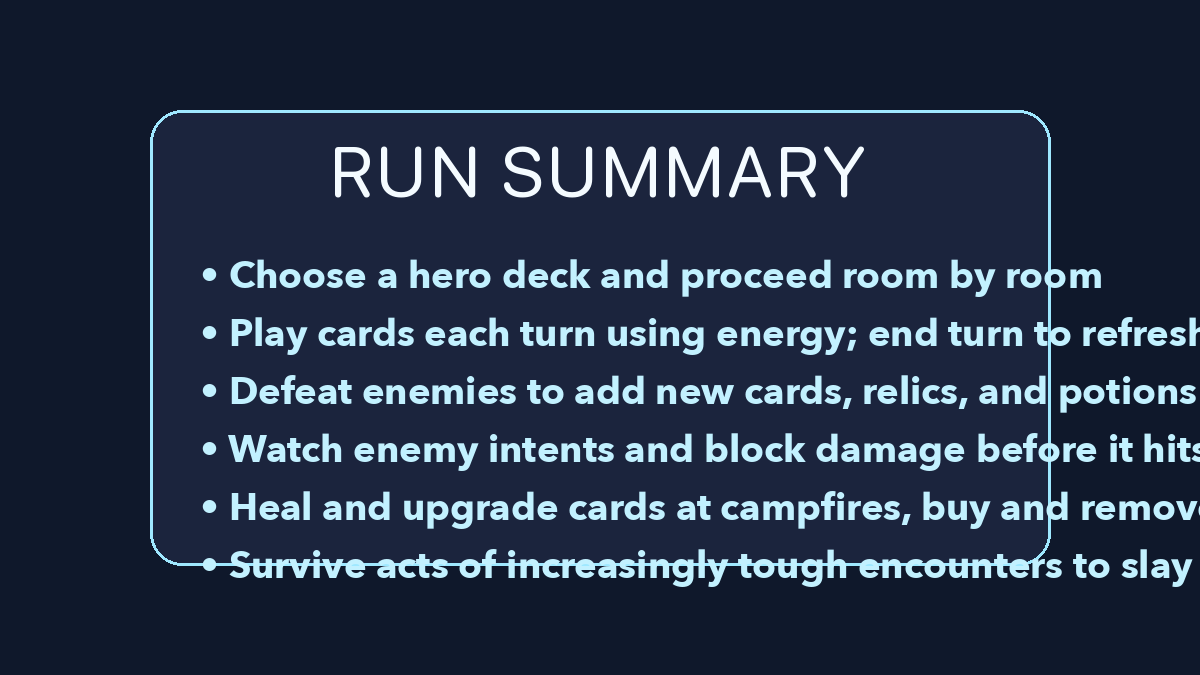
Slay the Web recreates the rhythm of Slay the Spire: navigate a branching map, take on battles, and gradually assemble a synergistic deck. Each fight reveals enemy intents, forcing you to balance damage and defence turn by turn. Between encounters you’ll draft cards, collect relics, and upgrade key abilities before facing elite foes and bosses.
Controls & UI
Mouse-first interface
- Click cards to queue them; press End Turn when finished.
- Hover enemy icons to view intents and status effects.
- Use the map button to choose your next node—combat, rest, shop, or event.
Keyboard shortcuts are minimal today, but the open-source project welcomes contributions that refine the UI or add accessibility options.
Progression & features
Open source foundation
- Multiple hero classes with unique starter decks.
- Events, merchants, and campfires where you can upgrade or heal.
- Runs persist in your browser—return later to continue a climb.
- Extendable codebase documented for modders and new card designers.
Frequently asked questions
Need a quick answer?
Q: Does Slay the Web include every feature from Slay the Spire?
A: It focuses on the core loop and is continually evolving. Expect regular updates as the community contributes.
Q: Can I play offline?
A: Install the repo locally and run the dev server, or rely on your browser cache after loading a run.
Q: How do I contribute?
A: Check the GitHub issues list for open tasks—new cards, balance tweaks, and UI improvements are all welcome.
Our take
Why Slay the Web is exciting for deckbuilder fans
Slay the Web is interesting not just because it echoes Slay the Spire’s structure, but because it does so in a fully open-source, browser-native way. You can feel the familiar cadence of planning routes, building synergies, and reacting to enemy intents—while also knowing the engine and cards are all inspectable and mod-friendly.
The project focuses on the core loop rather than flashy extras, which makes it a great playground for players who enjoy tinkering with deck balance or imagining new archetypes. It also runs directly in a tab, so quick lunchtime climbs are easy.
Who will enjoy it?
If you love roguelike deckbuilders and are curious about how they are put together under the hood, Slay the Web is a great fit. It is especially appealing to technically minded players who might want to propose cards, relics, or even fork the engine for their own projects.